Hugo Schmitt · 3 September 2026
Navigating Content Forging Techniques for Boosting Authority Signals in Solo Web Projects
Content forging techniques focus on systematic creation and structuring of material that strengthens domain authority for independent sites, and researchers at various institutions have documented how these approaches integrate original data compilation with strategic internal linking. Observers note that solo operators often combine multiple content elements into unified resources, which data from academic reviews indicates can elevate citation patterns over time.
Defining Authority Signals in Independent Web Environments
Authority signals encompass measurable indicators such as backlink profiles, content depth metrics, and entity recognition patterns that search systems evaluate when ranking pages, while studies from institutions like the University of Toronto highlight correlations between comprehensive topic coverage and improved visibility in competitive queries. Those who manage solo projects frequently track these signals through analytics platforms that record referral sources and engagement durations, and figures released by the Australian Bureau of Statistics in recent digital economy reports reveal steady growth in independent site traffic tied to structured content practices.
Core Forging Methods for Resource Development
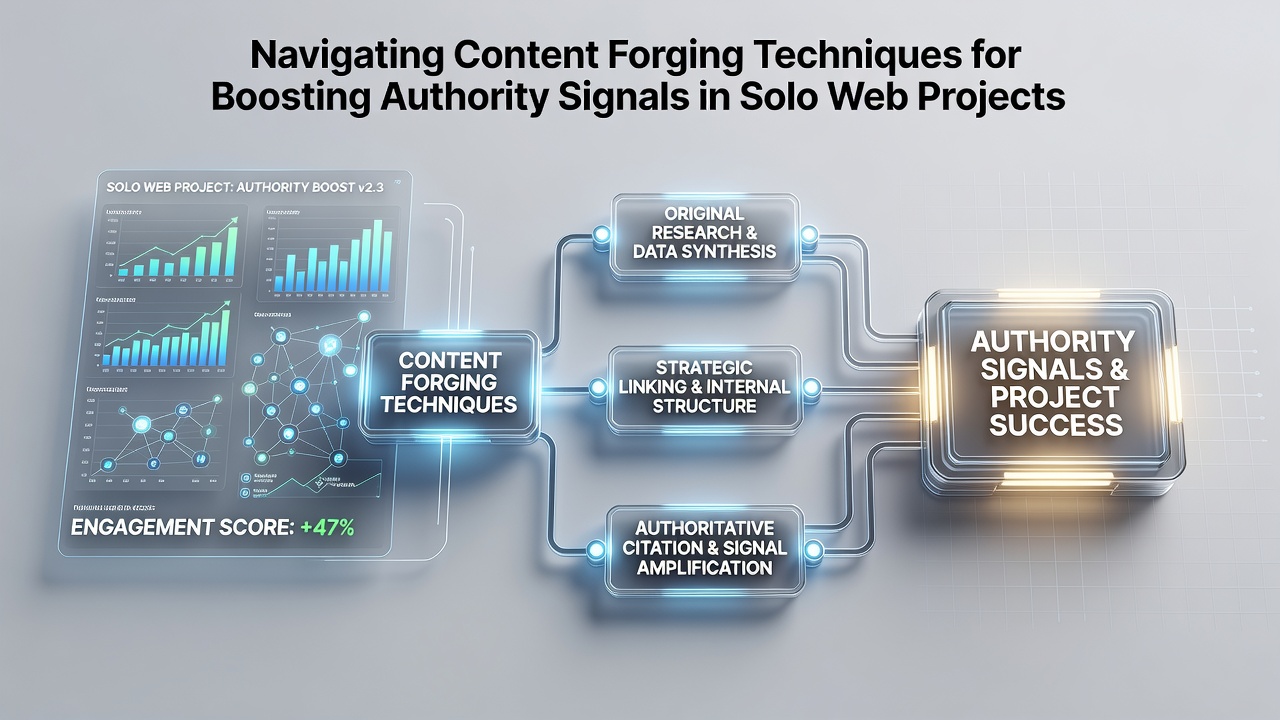
One established method involves synthesizing primary research outputs with secondary references into layered articles that address multiple subtopics within a single domain, and this process allows builders to embed schema markup that clarifies relationships between entities. Experts at the European Commission's digital innovation units have examined how such layered resources contribute to knowledge graph integration, particularly when updates occur around periods like September 2026 when new indexing protocols take effect. Another technique centers on repurposing interview transcripts and survey results into evergreen guides that accumulate external mentions, whereas data compiled by Canadian research councils shows measurable increases in domain-level trust scores for projects applying consistent update cycles.
Implementation begins with keyword mapping that identifies gaps in existing coverage, after which creators assemble supporting evidence from verified public datasets before drafting interconnected sections. Builders who apply these steps report that interlinking within the project reinforces topical clusters, and this internal architecture helps distribute authority across related pages without relying on external dependencies.
Practical Application in Solo Project Workflows
Solo developers often schedule content audits that review existing pages for completeness, then forge supplemental sections that fill informational voids while maintaining consistent voice and sourcing standards. Industry analyses from the Digital Content Association in Japan indicate that projects incorporating quarterly refreshes aligned with emerging data trends sustain higher authority trajectories compared to static alternatives. Integration of multimedia elements such as charts derived from open government statistics further strengthens perceived expertise, and these additions align with accessibility guidelines promoted by various national standards bodies.

Monitoring tools track changes in referring domain quality and anchor text diversity following each major content release, while results from longitudinal observations demonstrate that incremental improvements compound when maintained over multiple cycles. Those managing independent sites frequently cross-reference performance data against benchmarks published by organizations such as the Internet Society to calibrate their forging priorities.
Tracking Outcomes and Adjusting Strategies
Regular evaluation of authority metrics involves comparing pre- and post-publication snapshots of key indicators, and this comparison reveals which forging elements produce the strongest lift in specific niches. Reports issued by the National Institute of Standards and Technology outline frameworks for assessing content entity strength that solo operators adapt to their scale, allowing precise identification of underperforming clusters that require additional forging effort.
Conclusion
Effective navigation of content forging techniques rests on methodical assembly of original material supported by verifiable references and internal structures that amplify authority signals across solo web projects. Continued application of these documented approaches, informed by evolving standards from international bodies, supports sustained development of independent online resources through September 2026 and beyond.