Parker Bauer · 1 October 2026
Shifts in Digital Content Creation Practices Among Independent Operators Due to Platform Advancements
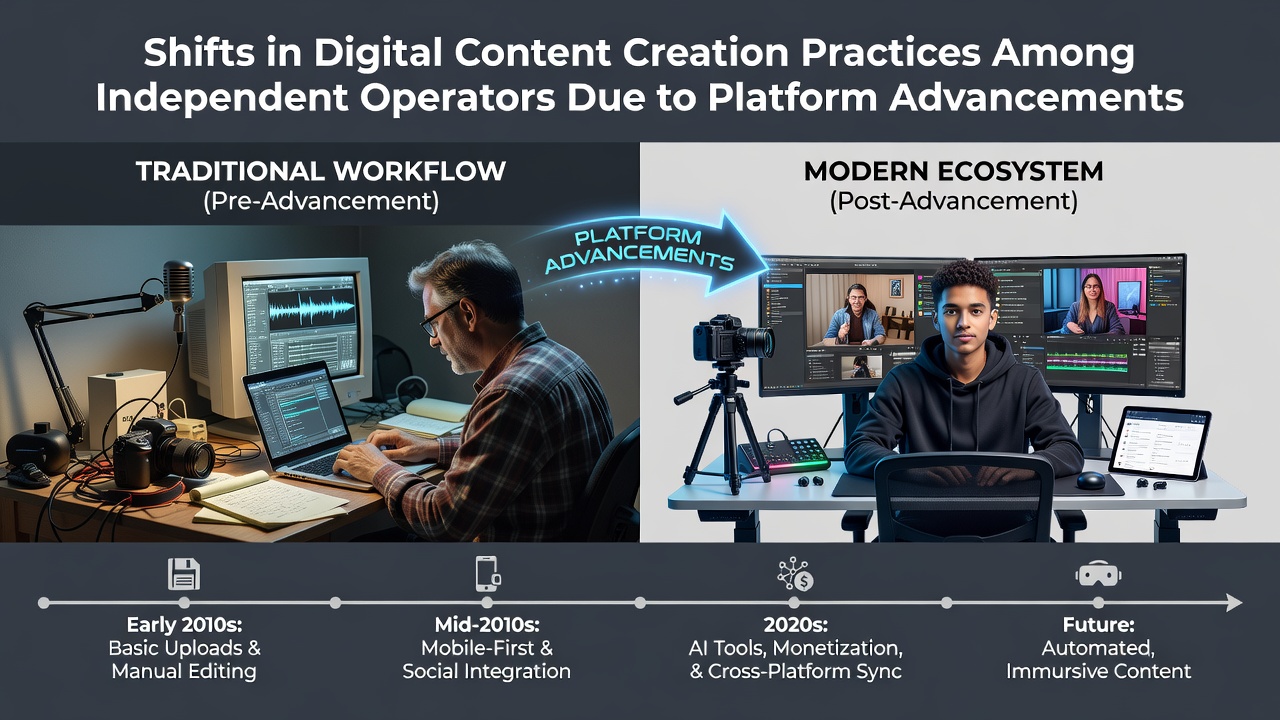
Platform advancements have prompted independent operators to adjust their content creation methods in measurable ways throughout 2026, and data from industry tracking services shows increased adoption of automated editing suites alongside algorithm-responsive posting schedules. Independent operators now integrate real-time analytics directly into their workflows, which allows them to refine topics based on engagement metrics that update hourly on major networks. This adjustment stems from changes in how platforms prioritize content, particularly after several services introduced enhanced recommendation engines in the first half of the year.
Algorithm Updates Drive Format Experimentation
Independent operators have expanded their use of short-form video clips that incorporate interactive elements, and reports indicate these formats receive higher distribution rates on platforms that updated their ranking systems in late 2025. Those who maintain solo sites often test multiple thumbnail variations before final publication, since A/B testing tools became standard in creator dashboards across regions. Data from performance tracking integrations reveals that operators in North America and the Asia-Pacific region allocate more production time to captions and metadata than they did two years prior.
Integration of Automation Tools Reshapes Workflows
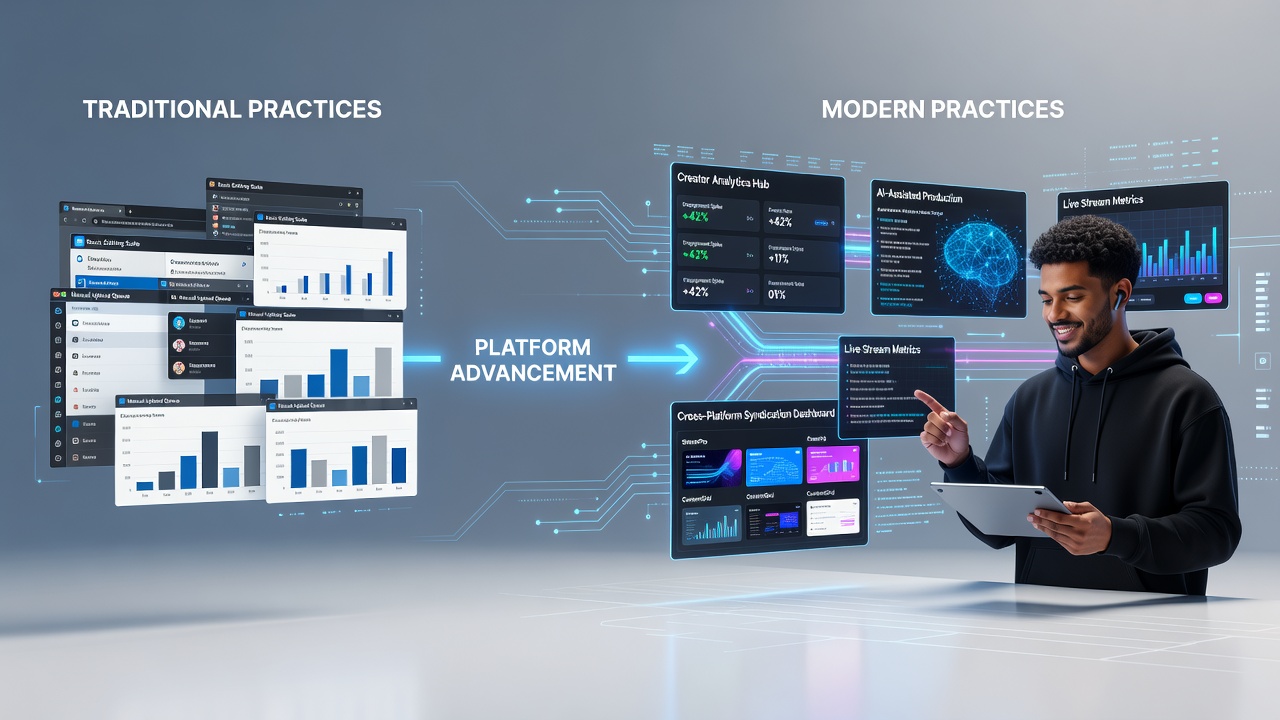
Automation platforms now connect seamlessly with performance dashboards, which enables independent operators to schedule posts across multiple channels while monitoring traffic quality from diverse referral sources. Researchers at academic institutions have documented a rise in hybrid human-AI scripting processes, where creators review generated outlines before adding original commentary. One study from a Canadian research consortium found that operators using these combined systems reduced average production cycles by 25 percent compared with manual methods alone.
Platform companies rolled out new application programming interfaces during the summer of 2026, and these updates support direct data pulls that feed into custom dashboards used by standalone digital ventures. Independent operators who adopted the interfaces early report more precise targeting of audience segments, particularly when cross-referencing engagement data with external link performance.
Regional Variations in Adaptation Patterns
European operators have incorporated compliance modules into their content pipelines following updates to digital services regulations, whereas operators in Australia emphasize mobile-first production techniques after local platforms introduced region-specific feed algorithms. Figures from the Australian Communications and Media Authority indicate that independent creators there increased live-stream output by 18 percent between January and September 2026. Meanwhile, operators in the United States have focused on long-form written content paired with embedded multimedia, as search integrations on major platforms began favoring depth signals in their indexing processes.
Link Building and Traffic Quality Adjustments
Independent site operators now prioritize referral sources that demonstrate sustained user engagement rather than volume alone, and this shift aligns with platform changes that de-emphasize low-quality backlinks in favor of contextual relevance. Performance tracking systems flag traffic patterns that correlate with higher retention rates, which encourages creators to diversify their outreach beyond traditional directories. One analysis published by an OECD-affiliated research group highlighted how these practices improved overall site authority metrics for operators who maintained consistent content calendars.
Future-Proofing Through Data-Driven Decisions
Those who operate standalone digital projects continue to refine their approaches based on quarterly platform transparency reports that detail changes to content distribution rules. The patterns observed in October 2026 suggest that operators who combine automation with selective human oversight maintain steadier growth trajectories across fluctuating algorithm environments. External data sources such as university-led longitudinal studies continue to supply benchmarks that independent operators consult when planning content calendars for the remainder of the year.
Conclusion
Platform advancements have produced measurable changes in how independent operators structure their creation processes, from format selection to tool integration. Ongoing updates to recommendation systems and data interfaces keep these adjustments active, and operators who track performance indicators closely demonstrate consistent adaptation across different geographic markets. The documented shifts reflect responses to technical capabilities that continue to evolve on major distribution networks.